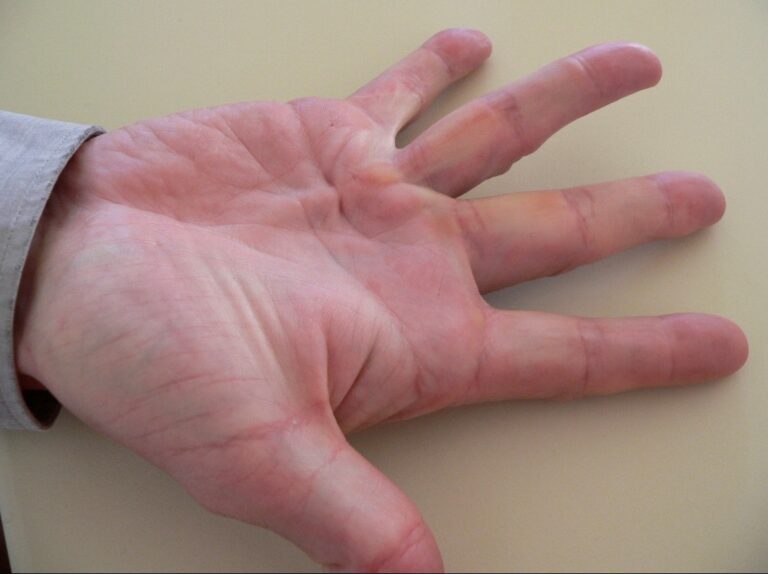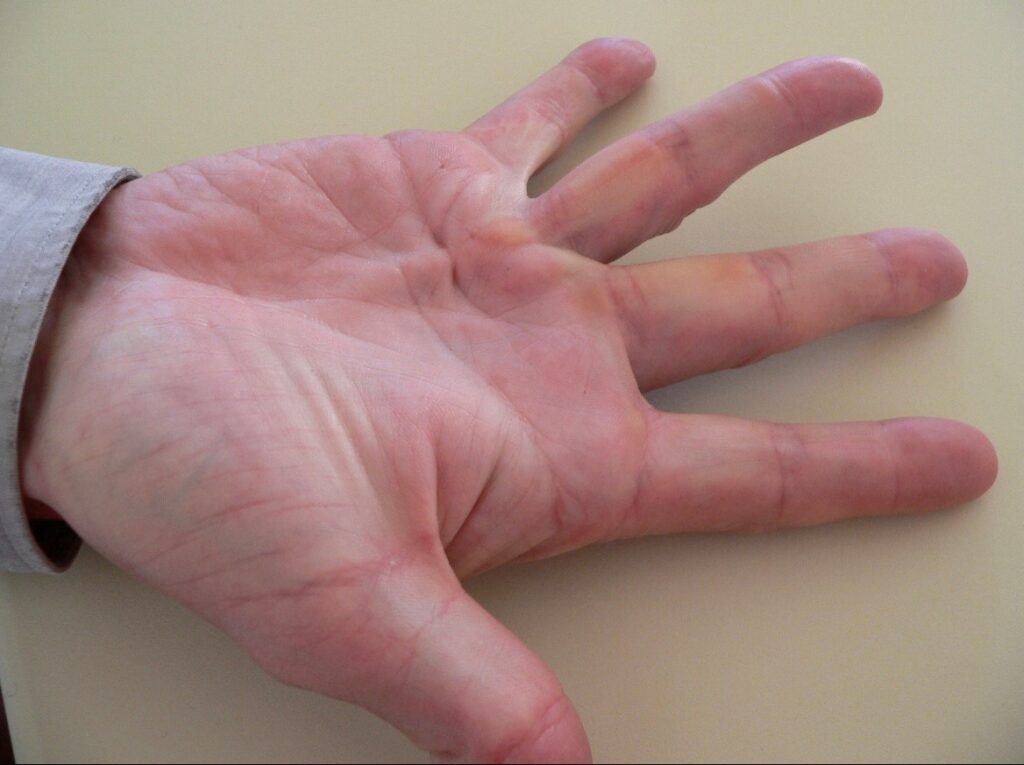
Dupuytren’s contracture is a common condition that causes one or more fingers to gradually curl into the palm. If you’ve noticed increasing tightness, difficulty straightening a finger, or trouble with everyday tasks, you may be wondering what your options are. Below is a clear guide to what Dupuytren’s is, when surgery may be recommended, and how a hand therapist can support you both before and after treatment.
What Is Dupuytren’s Contracture?
Dupuytren’s contracture occurs when the tissue (fascia) in the palm becomes thickened and tight. Over time, this can form cords that pull a finger into a bent position. It is not caused by injury, and in many people it progresses slowly.
When and Why to Consider Surgery?
Surgery may be recommended when:
- A finger can no longer fully straighten
- The condition is progressing
- Everyday tasks such as gripping, using tools, putting your hand in a pocket, or washing your hands are becoming difficult
Surgery aims to release or remove the affected tissue so that the finger can straighten more easily, improving comfort and function.
What to Expect After Surgery
Recovery varies depending on the type of surgery and the severity of the contracture, but typically includes:
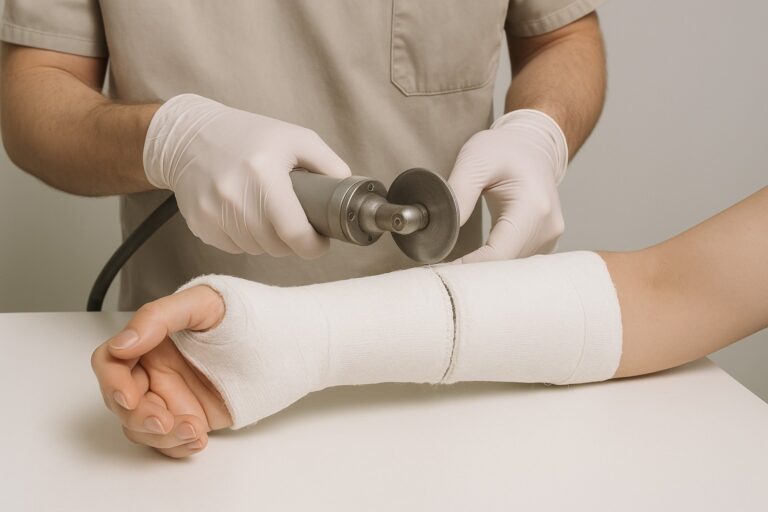
- A protective bandage or splint immediately after the operation
- Stitches removed after 10–14 days
- Early hand therapy to reduce swelling and help restore movement
- Night-time extension splinting, usually recommended for 3–6 months, to help maintain the finger’s improved position and reduce the risk of early contracture recurrence
- Gradual return of strength and function over weeks to months
Your surgeon and therapist will guide you through each stage.
How a Hand Therapist Can Help Before Surgery
Seeing a hand therapist before surgery can make a significant difference in your understanding, confidence, and outcome.
Pre-operative support includes:
Confirming the diagnosis
Not all curled fingers are caused by Dupuytren’s. Hand therapists can assess for other conditions such as trigger finger, ulnar nerve issues, joint stiffness, or tendon problems.
Improving comfort and function
Therapists can offer personalised strategies such as padded supports, activity modifications, and ways to reduce pain or strain.
Preparing you for surgery
You’ll learn what to expect on the day, what your hand will look and feel like afterwards, and how therapy can support healing.
Planning for recovery
Your therapist can help you understand wound care basics, arrange post-op appointments, and prepare for the exercises and splinting needed after the procedure.
How to Get Referred for Surgery – You have two main referral pathways:
Via your GP
Your GP can assess your hand and refer you to a public hospital hand surgeon or private when surgery is appropriate.
Via a hand therapist (private pathway)
Hand therapists can assess your condition and arrange a direct referral to a private hand surgeon for faster access to care.
Non-Operative Care: What We Know
Current research shows limited evidence for non-surgical treatments to reverse Dupuytren’s contracture. However, hand therapy can still be extremely valuable by helping you:
- Manage pain and swelling
- Maintain or improve strength and hand function
- Understand your options and support decision-making about surgery
Need Advice or an Assessment?
If you’re concerned about finger curling, hand stiffness, or are considering your next steps with Dupuytren’s, our therapists are here to help.
We provide thorough assessment, personalised guidance, and seamless referral pathways to both public and private hand surgeons.
Book an appointment or contact us to learn more.
Merivale Hand Clinic
📍 208 Papanui Road, Christchurch
📞 Tel: 03 355 9775
📧 Email: office@merivalehandclinic.co.nz
🌐 Website: www.merivalehandclinic.co.nz